Disclosure: Some links on this page are affiliate links. If you buy through them, we may earn a commission at no extra cost to you. It never affects our ratings.
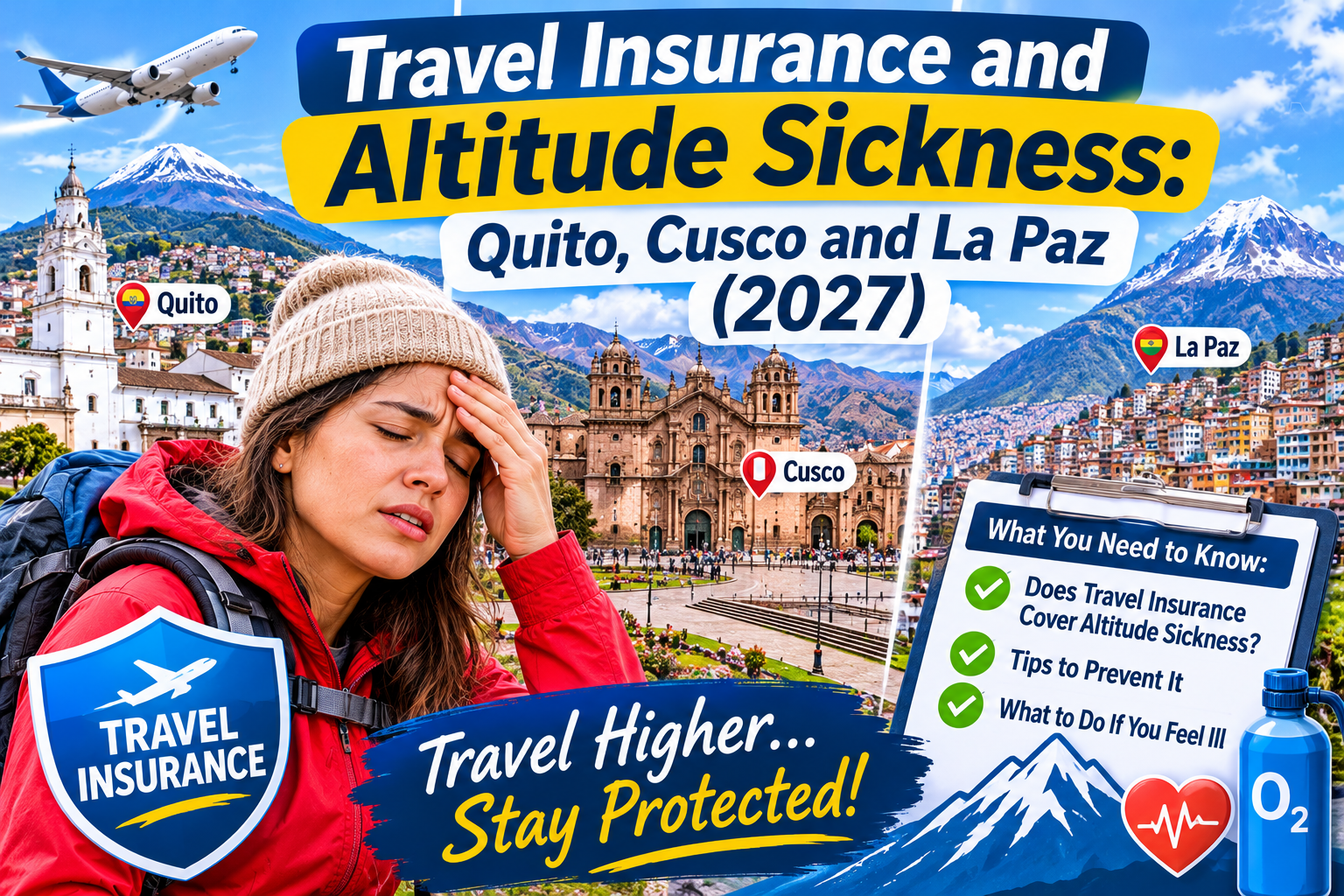
Many of South America’s most popular cities sit higher than most US ski resorts. You can step off a plane in Cusco, La Paz or Quito and feel short of breath before you reach baggage claim. For most travelers, the result is a headache and a slow first day. For a few, it becomes a medical emergency.
That raises a practical question for anyone planning a trip or a move to the Andes: does travel insurance cover altitude sickness? In most cases, yes, but the details matter, especially for older travelers, people with heart or lung conditions, and anyone planning treks above the cities.
This guide explains how altitude illness works, what insurance covers in Quito, Cusco and La Paz, the exclusions to watch for, and how to choose a policy before you go.
The Short Answer
- Most travel medical policies cover altitude sickness as an illness when you’re visiting a city or hiking on recognized routes within the policy’s altitude limits.
- Altitude limits apply mainly to hiking and trekking, not to staying in a city. Policies commonly cap hiking at 3,000, 4,500 or 6,000 meters depending on the plan.
- Pre-existing heart and lung conditions are the main risk for claims. If altitude worsens a condition you didn’t disclose or that isn’t covered, the claim may be denied.
- Evacuation coverage matters. The main treatment for serious altitude illness is descent and oxygen. In La Paz, descending can mean a flight.
- Medicare generally won’t cover you abroad. Buy a travel medical plan.
How High Are These Cities?
| Destination | Approximate elevation | What to expect |
|---|---|---|
| Quito, Ecuador | About 2,850 m (9,350 ft) | Mild symptoms are common on arrival |
| Cuenca, Ecuador | About 2,500 m (8,200 ft) | Many expats notice it for a few days |
| Cusco, Peru | About 3,350 to 3,400 m (11,000 to 11,150 ft) | The CDC lists it as a popular high-altitude destination |
| Machu Picchu, Peru | About 2,430 m (7,970 ft) | Lower than Cusco |
| La Paz, Bolivia | About 3,640 m (11,940 ft) | Affects almost all visitors to some degree |
| El Alto airport (La Paz) | About 4,060 m (13,325 ft) | You land higher than the city itself |
The CDC Yellow Book notes that some popular destinations require rapid ascent by plane to more than 3,400 meters, which places travelers in the high-risk category for altitude illness. Cusco and La Paz both fit that description.
Altitude Sickness Basics
Altitude illness is caused by lower oxygen levels at high elevation. The CDC describes three main forms:
| Condition | What it is | How serious |
|---|---|---|
| Acute mountain sickness (AMS) | The mildest and most common form: headache, tiredness, loss of appetite and nausea | Usually resolves with rest and time; can worsen if you keep ascending |
| High-altitude pulmonary edema (HAPE) | Fluid in the lungs: breathlessness at rest, cough, reduced exercise tolerance | Life-threatening; needs oxygen and descent |
| High-altitude cerebral edema (HACE) | Brain swelling: confusion, loss of coordination, drowsiness | Life-threatening; needs immediate descent and treatment |
When it starts
According to guidance from the Wilderness Medical Society, unacclimatized people face a high risk of altitude illness above 2,500 meters (8,200 ft), but AMS can appear as low as 2,000 meters (6,500 ft). The CDC says acute acclimatization takes three to five days.
Who’s at higher risk
- Anyone who flies directly to high altitude, such as Cusco or La Paz
- People who’ve had altitude illness before. The WMS says anyone with a history of HAPE or HACE is at high risk of AMS regardless of how they ascend
- People who ascend quickly or exert themselves early
- Travelers with heart or lung disease, who should talk to a doctor before going
Fitness doesn’t protect you. Fit, young travelers get altitude sickness too.
Prevention that actually works
The CDC and WMS recommendations come down to a few practical steps:
- Ascend gradually when you can. The CDC notes that spending two to three nights at 2,450 to 2,750 meters before going higher is markedly protective. The WMS recommends not going straight to a sleeping elevation of 2,750 meters or higher in one day and, once above 3,000 meters, raising your sleeping elevation by no more than about 500 meters per night.
- Sleep lower than where you land. For Cusco, many travelers go straight to the Sacred Valley, which is lower, before returning to Cusco. For La Paz, staying in the lower Zona Sur can help.
- Take it easy for the first 24 to 48 hours. Avoid hard exertion and alcohol.
- Ask your doctor about medication. The CDC says medicines can prevent AMS and shorten acclimatization. The WMS says acetazolamide aids acclimatization and should be strongly considered for travelers at moderate to high risk. Only your doctor can say whether it’s right for you.
- Never keep climbing with symptoms. If symptoms worsen, descend.
Insurance angle: following medical advice isn’t just about health. If you ignore clear warning signs and keep ascending, some insurers may look harder at the claim.
What Travel Insurance Covers
Usually covered
- Doctor visits and emergency room care for altitude sickness symptoms
- Oxygen, medication and hospitalization if symptoms become serious
- Emergency medical evacuation to a lower elevation or a better-equipped hospital, within your plan’s limits
- Trip interruption on some plans, if a doctor orders you to cut your trip short
Where claims run into trouble
1. Hiking above the altitude limit. Staying in La Paz or Cusco is normal travel. But treks are a different story. Examples from current policies:
| Insurer | Hiking altitude limit |
|---|---|
| SafetyWing Nomad Insurance Essential | Up to 4,500 m on the base plan, on certified official paths; up to 6,000 m with the Adventure Sports add-on |
| World Nomads (US residents) | Standard plan up to 6,000 m; Epic plan up to 8,000 m |
| World Nomads (some non-US versions) | Hiking up to 3,000 m on recognized routes on both plans, with higher limits available |
Most Andean city tours stay well within these limits. But some popular excursions don’t. Bolivia’s Huayna Potosí, Peru’s Rainbow Mountain and high passes on the Salkantay trek can approach or exceed common limits. Check the exact altitude of every excursion against your policy.
2. Pre-existing conditions. Altitude can worsen heart disease, lung disease (such as COPD) and some other conditions. If you have a condition that isn’t disclosed or isn’t covered, a claim linked to it may be denied. Read the pre-existing condition terms carefully. See our guide to pre-existing conditions and international health insurance.
3. Off-route or technical climbing. Many policies exclude hiking off recognized routes, or where ropes, ice axes or other specialist equipment is required.
4. Low evacuation limits. A basic plan might cover a hospital stay but not an air ambulance from La Paz to a lower city. See our medical evacuation guide.
If You’re on Medicare
Original Medicare generally doesn’t cover care outside the US. Some Medigap plans include a foreign travel emergency benefit: 80% of covered care after a $250 deductible, for the first 60 days of a trip, up to a $50,000 lifetime maximum. That won’t cover an evacuation. Retirees heading to Cusco or La Paz should buy a travel medical plan with strong evacuation coverage. See Medigap foreign travel emergency coverage.
If You Live in South America
- Expat plans (Cigna, IMG, GeoBlue, Bupa) usually cover altitude illness like any other illness within your area of cover, but check sports and hazardous activity exclusions before high treks.
- Local plans don’t travel. Ecuador’s IESS, Peru’s EsSalud or a Colombian EPS won’t cover you in Bolivia. Buy a travel policy for the trip.
- Living at altitude helps, but not completely. Expats in Quito or Cuenca are partly acclimatized, but La Paz and high treks are higher still.
What to Look for in a Policy
- Covers every country on your route (Peru and Bolivia trips often cross both)
- Hiking altitude limit above your highest excursion
- Emergency evacuation of at least $250,000, more for older travelers
- Clear pre-existing condition terms if you have heart or lung issues
- 24/7 assistance line that can arrange evacuation
- Trip interruption, if you’ve prepaid tours or treks
City by City
Quito, Ecuador (about 2,850 m)
Quito is the gentlest of the three. Many visitors feel mildly tired or get headaches for a day or two. Serious altitude illness in the city itself is less common, but it’s possible, especially for older travelers and people with lung or heart conditions.
- Medical care: Quito has well-equipped private hospitals used by expats and travelers.
- The bigger risk is the side trips. Excursions to Cotopaxi’s refuge, Chimborazo or high páramo hikes go far higher than the city. Check those altitudes against your policy.
- For Galápagos travelers: many people pass through Quito on the way to the islands. See our Galápagos insurance guide.
Cusco, Peru (about 3,350 to 3,400 m)
Cusco is where most Americans meet altitude sickness for the first time. You fly from Lima, close to sea level, to well over 3,000 meters in about an hour.
- Sleep lower first. Many itineraries head straight to the Sacred Valley, which is lower than Cusco, and return to Cusco at the end. Machu Picchu itself is lower than Cusco too.
- Medical care: Cusco has private clinics that treat altitude sickness every day, and many hotels offer oxygen. Serious cases may be transferred to Lima.
- Watch your treks. The classic Inca Trail stays within common limits, but Rainbow Mountain and some Salkantay passes go higher. See our Machu Picchu insurance guide.
La Paz, Bolivia (about 3,640 m; airport about 4,060 m)
La Paz is the most demanding of the three. You land at El Alto International Airport, one of the highest international airports in the world, and then descend into the city.
- Expect symptoms. Altitude affects almost every visitor to some degree.
- Stay lower if you can. The Zona Sur neighborhoods are roughly 300 meters lower than the center.
- Acclimatize on the way. Arriving overland from Peru, or spending time in lower cities such as Sucre (about 2,810 m) or Cochabamba (about 2,560 m), can help.
- Weather diversions happen. Flights to La Paz are sometimes diverted to Cochabamba because of El Alto’s altitude and weather. Trip delay coverage can help.
- Evacuation matters most here. Because the whole metro area is high, the fastest way to lower altitude for a serious case can be a flight.
Quick comparison
| Quito | Cusco | La Paz | |
|---|---|---|---|
| Risk on arrival | Low to moderate | High (rapid ascent by air) | High (rapid ascent by air, very high airport) |
| Easy way to sleep lower | Valleys around the city | Sacred Valley | Zona Sur |
| Insurance priority | Medical coverage for side trips | Altitude limits for treks | Evacuation coverage |
Real-World Scenarios
Scenario 1: A 70-year-old couple from Florida visiting Cusco and Machu Picchu
One spouse has well-controlled high blood pressure. They have Medicare and a Medigap plan.
What they need: a travel medical policy with clear pre-existing condition terms (many plans offer a waiver if you buy soon after your first trip payment), strong evacuation coverage and coverage for Peru. They should talk to their doctor about altitude before the trip, plan their first nights in the Sacred Valley and not rely on Medigap’s $50,000 lifetime foreign travel limit.
Scenario 2: An expat in Cuenca flying to La Paz
She’s 58, has IESS and lives at about 2,500 meters.
What she needs: IESS won’t cover her in Bolivia, so she buys a short travel medical policy. Living at altitude helps, but La Paz is more than 1,000 meters higher than Cuenca, and the airport is higher still. She books a hotel in Zona Sur for the first nights and chooses a policy with at least $250,000 in evacuation.
Scenario 3: A 30-year-old on SafetyWing planning Huayna Potosí
What he needs: Huayna Potosí is a mountaineering climb above 6,000 meters with ropes and ice axes. That’s beyond the base plan’s 4,500-meter hiking limit and beyond what the Adventure Sports add-on covers for hiking. He needs a specialist mountaineering policy for the climb.
Scenario 4: A family stopping in Quito before the Galápagos
What they need: Quito’s altitude is moderate, so the main risk is a mild first day. Their travel policy should cover both mainland Ecuador and the Galápagos, and they should plan an easy first day before any high side trips such as Cotopaxi.
Before You Go: Checklist
- Talk to your doctor if you have heart, lung or other chronic conditions
- Ask your doctor whether altitude medication makes sense for you
- List the highest altitude of every excursion and check it against your policy
- Buy a policy that covers every country on your route
- Choose at least $250,000 in emergency evacuation
- Disclose pre-existing conditions and read the terms
- Plan your first nights at a lower altitude when you can
- Save your insurer’s 24/7 number before you fly
- Learn the warning signs of HAPE and HACE
Common Mistakes
- Assuming altitude sickness isn’t “real” illness. It is, and serious forms are emergencies.
- Booking a high trek without checking the policy’s altitude limit.
- Not disclosing a heart or lung condition. A related claim could be denied.
- Relying on Medicare or a local plan from another country.
- Pushing higher with symptoms. It’s dangerous and can complicate a claim.
- Buying a plan with low evacuation limits for La Paz. Descent there can mean a flight.
FAQ
Does travel insurance cover altitude sickness? Usually, yes. Most travel medical policies treat altitude sickness like any other illness when you’re traveling normally or hiking within the policy’s altitude limits. Claims can be denied for treks above the limit, technical climbing or undisclosed pre-existing conditions.
Is there an altitude limit for staying in a city like La Paz? Altitude limits in travel policies usually apply to hiking, trekking and climbing, not to staying in a city. Still, check your policy wording.
What altitude limit should I look for? At least as high as your highest planned excursion. For city trips to Quito, Cusco and La Paz, common limits of 4,500 to 6,000 meters for hiking are usually enough. Some treks, like Rainbow Mountain, go higher.
Does Medicare cover altitude sickness abroad? Original Medicare generally doesn’t cover care outside the US. Some Medigap plans cover 80% of emergency care abroad after a $250 deductible, up to $50,000 for life.
Who should see a doctor before going? Anyone with heart or lung disease, anyone who’s had altitude illness before and anyone flying directly to Cusco or La Paz. Your doctor can also advise on prevention medication.
Is Quito high enough to cause altitude sickness? Yes, it can. Quito is about 2,850 meters, above the 2,500-meter level at which the risk rises for unacclimatized people. Most visitors only notice mild symptoms.
The Bottom Line
Altitude sickness is the most predictable health risk on a trip to the Andes, and most travel medical policies cover it. The gaps appear with high treks above the policy’s limit, pre-existing heart or lung conditions and low evacuation limits. Choose a policy that covers every country on your route, sets its hiking limit above your highest excursion and includes at least $250,000 in evacuation. Then follow the CDC’s advice: ascend gradually, sleep lower when you can and never climb higher with symptoms.
Keep Reading
- Machu Picchu Travel Insurance
- Patagonia Trekking Insurance
- SafetyWing vs. World Nomads vs. Genki
- Medical Evacuation Insurance
- Medigap Foreign Travel Emergency Coverage
- How Healthcare Works in South America
This article is for informational purposes only and is not medical, insurance or legal advice. Talk to a doctor about altitude risks and medication before you travel, and read your policy’s current wording before you buy.
Sources
- CDC Yellow Book 2026 — High-Altitude Travel and Altitude Illness
- CDC Yellow Book 2024 — High Elevation Travel and Altitude Illness
- CDC — Travel to High Altitudes
- American Family Physician — Wilderness Medical Society altitude illness guidelines
- OSAC — Altitude sickness and city elevations
- SafetyWing — Hiking at high altitudes (updated plan)
- World Nomads — Hiking travel insurance (US residents)
- Culture Trip — Coping with the altitude in La Paz
Leave a Reply